A certified arborist's guide to knowing when a tree needs to come down
Not every tree can — or should — be saved. This guide covers the situations where removal is the safest, smartest decision for your property, your family, and the trees around it.
Removing a tree is always the last option. But when a tree becomes a liability instead of an asset, waiting too long can cost you far more than the removal itself.
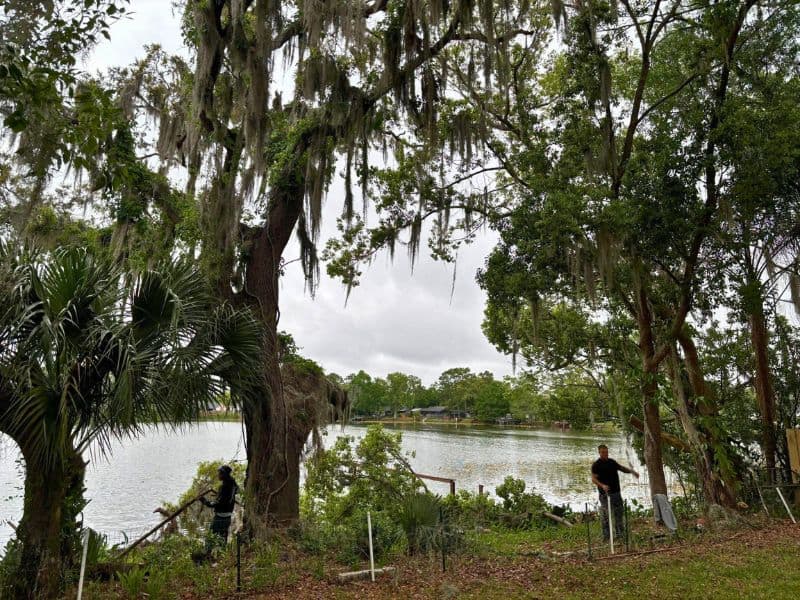
At Cox Arboriculture Services, we remove trees every week across Orlando, Winter Park, Maitland, and the greater Central Florida area. Some are emergency removals after storms. Some are trees that have been declining for years. And some are perfectly healthy trees that are simply in the wrong place. The one thing they all have in common: the homeowner waited longer than they should have to make the call.
This guide walks through every scenario where removal is the right decision — so you can recognize the signs before a tree becomes an emergency.
This is the most straightforward reason for removal. A dead tree has no structural integrity — the wood dries out, becomes brittle, and can snap without warning. In Central Florida's storm climate, a dead tree near your home is a ticking clock.
Signs a tree is dead or in terminal decline:
A dying tree sometimes looks okay from the street — a few green leaves can mask severe internal decay. If you're unsure, our tree health assessment can determine how much viable tissue remains. For a deeper look at the warning signs, read our guide on signs a tree is dying.
Central Florida averages one to two significant tropical systems every year, plus countless severe thunderstorms from June through October. Storm damage ranges from minor branch breaks to catastrophic trunk splits.
A tree can often survive losing 25–30% of its canopy to storm damage. But removal is usually the right call when:
After a major storm, resist the urge to make a snap decision. Get a professional assessment first — some trees that look terrible can recover with proper care, and some that look fine are structurally compromised. Our storm damage cleanup team responds within 24 hours across the Orlando area. For a detailed walkthrough, see our storm-damaged tree assessment guide.
Some tree diseases in Central Florida are treatable. Others are death sentences. When a disease can't be cured and the tree becomes a risk to surrounding trees or structures, removal is the responsible choice.
Diseases that typically require removal in our area:
Removing a diseased tree promptly also protects healthy trees nearby. Many pathogens spread through root contact, insect vectors, or airborne spores. Learn more in our guide to common tree diseases in Central Florida.
Roots are the foundation. When they fail, the entire tree is compromised — and unlike trunk or canopy issues, root problems are often invisible until it's too late.
Common causes of root failure in Central Florida:
A tree with compromised roots may look healthy above ground for months or even years before toppling. If you've had recent construction near a mature tree, or you notice roots lifting or soil heaving, get it assessed. Trees with root damage to nearby structures are covered in our tree root damage to foundations guide and our root management services.
Structural problems are the leading cause of tree failures that damage property. Some defects can be managed with cabling, bracing, or strategic pruning. Others are too severe.
Structural defects that often require removal:
Our certified arborists evaluate structural defects using visual assessment and, when necessary, resistograph testing to measure internal wood density. Sometimes a cabling system can manage the risk. Other times, removal is the only safe option.
A healthy tree in the wrong location is still a problem. Common conflicts we see across Orlando:
In many cases, pruning or root barriers can manage the conflict. But when a large tree's root system is already damaging your foundation or plumbing, removal and stump grinding are the permanent fix. Learn more about tree root damage to foundations.
In Florida, property owners can be held liable if a tree they knew (or should have known) was hazardous falls and damages a neighbor's property or injures someone. This applies to dead trees, trees with obvious structural defects, and trees that have been flagged by an arborist or insurance inspector.
If your insurance company has asked you to address a tree, or a neighbor has raised concerns about a tree on your property line, take it seriously. Documentation matters — a written arborist report creates a record that you acted responsibly.
We cover this topic in depth in our falling trees and liability guide, including Florida-specific legal considerations for property owners.
Central Florida has several invasive tree species that outcompete native vegetation, spread aggressively, and cause long-term ecological damage. Removing them is often the right call — and in some cases, it's recommended by the Florida Exotic Pest Plant Council.
Common invasive trees we remove:
Removing invasive trees and replacing them with native species like live oaks, sabal palms, or bald cypress improves your property's resilience and ecological value.
Home additions, pool installations, new driveways, and other construction projects sometimes require tree removal. Before removing any tree for construction, check with your local municipality — many Central Florida cities have tree protection ordinances.
Orange County requires a permit to remove trees over a certain caliper (trunk diameter), and the City of Orlando has its own tree ordinance with replacement requirements. Winter Park is particularly strict about tree removal on private property.
We handle the permitting process for our clients and can advise on whether a tree can be preserved with root protection during construction or whether removal is the practical option.
Some homeowners try to manage a problematic tree through repeated heavy pruning — reducing it, topping it, or stripping the canopy to keep it “under control.” This approach is counterproductive. Topping and over-pruning create weaker, more dangerous trees with dense regrowth that fails at higher rates.
If a tree is too large for its location and you've been fighting to keep it small through aggressive pruning, removal and replanting with an appropriately sized species is the better long-term investment. Our pruning guide for Florida homes explains the limits of what pruning can realistically achieve.
Professional tree removal isn't a chainsaw-and-hope operation. Our process starts with a site assessment where we evaluate access, overhead utilities, nearby structures, and the tree's condition. We develop a removal plan that prioritizes safety for your property and our crew.
Most residential removals in Orlando take a single day. The tree is dismantled in sections from the top down using rigging equipment to control each piece. We chip brush on-site, haul away all wood and debris, and leave the area clean.
Stump grinding is a separate step — we grind the stump 6–12 inches below grade and backfill with the grindings. Learn more about our full tree removal services and stump grinding services.
Our certified arborists will evaluate your tree honestly and give you a clear recommendation — treatment, monitoring, or removal. No pressure, no upsell. Just straight answers.