Common Tree Diseases in Central Florida
Central Florida's warm, humid climate is paradise for trees — and for the fungi, bacteria, and pests that attack them. At Cox Arboriculture Services, we diagnose and treat diseased trees across Orlando, Winter Park, Maitland, and the surrounding area every week. This guide covers the diseases we encounter most often, how to identify them, and what you can actually do about them before it's too late.
Why Central Florida Trees Are Especially Vulnerable
Three factors make our region a hotspot for tree disease:
- Year-round warmth — Fungal pathogens don't go dormant here the way they do in northern states. They're active twelve months a year.
- High humidity and afternoon storms — Summer's daily rain cycle creates the moisture that most fungal diseases need to spread.
- Dense canopies — Many Florida properties have mature tree canopies that trap moisture and limit airflow, creating ideal conditions for infection.
The good news is that most tree diseases are manageable if caught early. The key is knowing what to look for.
Ganoderma Butt Rot
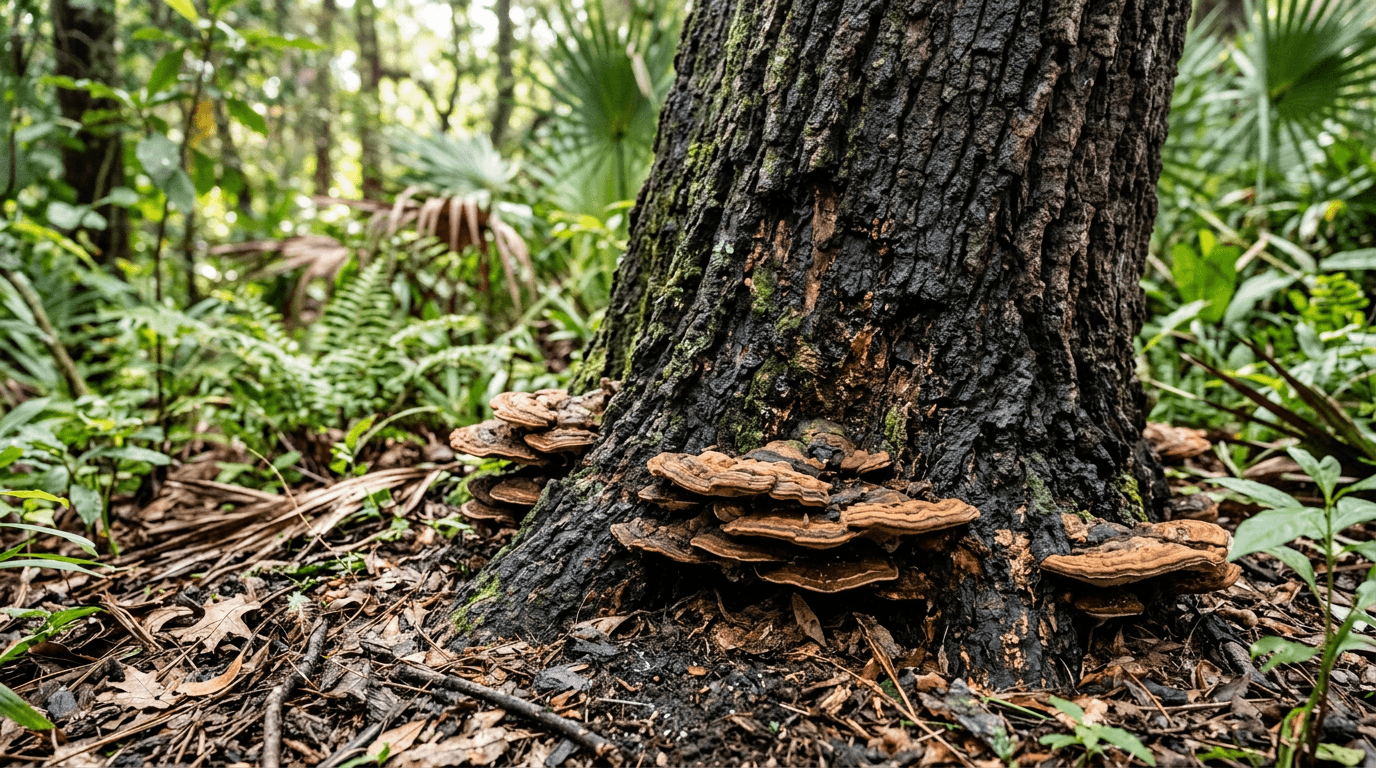
What it is: The most dangerous tree disease in Central Florida. Ganoderma is a fungal infection that attacks the base (butt) and root system of the tree, destroying the wood from the inside out. By the time you see symptoms, the internal decay is usually extensive.
What to look for:
- Semi-circular shelf fungi (conks) growing from the base of the trunk — they're reddish-brown on top with a white underside
- Wilting or thinning canopy with no obvious cause
- Leaning that wasn't there before
- Soft, punky wood at the base when probed
Trees affected: Palms (especially queen palms and royal palms), oaks, maples, and many other hardwoods.
What to do: There is no cure for Ganoderma. Once a conk appears, the internal decay is advanced and the tree is a structural hazard. We recommend removal before it fails on its own. If you suspect Ganoderma on your property, contact us for an assessment — this is not something to wait on.
Laurel Wilt
What it is: A lethal fungal disease spread by the redbay ambrosia beetle. It attacks trees in the laurel family by clogging their water-conducting vessels, essentially causing the tree to die of thirst.
What to look for:
- Rapid wilting of leaves that turn reddish-brown but stay attached to the branch
- Dark streaking visible in the sapwood when bark is peeled back
- Tiny beetle entry holes (toothpick-sized) with sawdust tubes
- Entire tree can go from healthy to dead in weeks
Trees affected: Redbay, swamp bay, avocado, and sassafras — all common across Central Florida.
What to do: Infected trees cannot be saved and should be removed promptly to reduce beetle populations. Do not chip or move infected wood — it spreads the beetles. Our team follows proper disposal protocols for laurel wilt removals. Learn more about our professional tree removal services.
Lethal Bronzing (formerly Lethal Yellowing)
What it is: A bacterial disease spread by a tiny planthopper insect. It's been devastating to palms across Florida for decades.
What to look for:
- Premature fruit drop
- Flower stalks (inflorescences) that blacken and die
- Lower fronds turning brown and collapsing against the trunk, progressing upward
- The spear leaf (the newest, still-folded frond at the top) collapses last — once it does, the palm is dead
Trees affected: Sabal palms, date palms, coconut palms, and several other palm species. Sabal palms are the Florida state tree and are heavily affected in our region.
What to do: Preventive antibiotic injections (oxytetracycline) can protect healthy palms in areas where lethal bronzing has been confirmed. Once symptoms appear, treatment is rarely effective and removal is the safest option. If you have sabal palms or date palms on your property, proactive treatment is worth considering. See our palm tree trimming page for ongoing palm maintenance.
Hypoxylon Canker
What it is: A fungal disease that attacks trees already stressed by drought, root damage, construction injury, or other factors. It colonizes the sapwood beneath the bark.
What to look for:
- Bark sloughing off in patches, exposing dark, crusty fungal mats underneath
- The fungal mats start tan or olive-colored and darken to black as they mature
- Thinning canopy and branch dieback
- Often appears after a drought year or significant root disturbance
Trees affected: Oaks (especially post oaks, water oaks, and red oaks), pecans, and other hardwoods.
What to do: There's no fungicide treatment for Hypoxylon. The fungus is opportunistic — it's always present in the environment but only attacks weakened trees. Prevention means keeping trees healthy: proper watering during drought, avoiding root damage during construction, and not over-mulching. Heavily infected trees should be removed. For an honest assessment of whether your tree can be saved, schedule a free evaluation.
Mushroom Root Rot (Armillaria)
What it is: A soil-borne fungal disease that attacks roots and the base of the trunk. It can spread from tree to tree through root contact underground.
What to look for:
- Clusters of honey-colored mushrooms at the base of the tree, especially after rain
- White, fan-shaped fungal mats under the bark near ground level
- Black, shoestring-like rhizomorphs (fungal strands) in the soil around roots
- Gradual canopy decline, yellowing leaves, and branch dieback
Trees affected: Oaks, pines, citrus, and many ornamental trees. It's particularly common in areas where trees were planted on former agricultural land — which describes a lot of Central Florida subdivisions.
What to do: Mildly affected trees can sometimes be managed by improving drainage, reducing irrigation near the trunk, and removing mulch that's piled against the bark. Severely affected trees — especially those with mushrooms appearing regularly — are structurally compromised and should be assessed for removal. Our tree health assessment service can determine the extent of root damage.
Sooty Mold
What it is: A black, soot-like coating on leaves and branches. Sooty mold itself doesn't infect the tree — it grows on the sticky honeydew secreted by sap-sucking insects like aphids, scale, and whiteflies.
What to look for:
- Black, powdery or crusty coating on leaf surfaces
- Sticky residue on leaves, cars, or anything parked beneath the tree
- Tiny insects visible on leaf undersides or along branches
Trees affected: Nearly any tree species, but especially common on crape myrtles, magnolias, citrus, and oaks in Central Florida.
What to do: Treat the insect problem, and the sooty mold goes away on its own. Horticultural oil sprays or insecticidal soaps applied to affected areas will knock down aphid and scale populations. For large trees, professional application is more effective. Improving airflow through crown thinning and pruning also reduces insect habitat.
Bacterial Leaf Scorch
What it is: Caused by the bacterium Xylella fastidiosa, spread by leafhopper and sharpshooter insects. It clogs the tree's water-conducting vessels, causing progressive leaf browning from the margins inward.
What to look for:
- Leaf edges turning brown while the interior stays green, creating a "scorched" look
- Symptoms start on one branch or section and spread over several years
- Premature leaf drop
- Progressive branch dieback
Trees affected: Oaks (especially live oaks and sycamore oaks), elms, sycamores, and maples.
What to do: There's no cure, but antibiotic injections can slow progression and buy time. Some trees live with bacterial leaf scorch for years with proper management. Others decline quickly and eventually need removal. Early detection gives you the most options. If you're seeing scorch-like symptoms on your oaks, get a professional diagnosis before assuming it's just drought stress.
When to Call a Professional
Some signs demand immediate attention:
- Mushrooms or shelf fungi at the base of the tree — structural failure risk
- Rapid wilting across an entire tree — likely a vascular disease
- Large sections of bark falling off — possible Hypoxylon or severe decline
- Leaning that appeared suddenly — root system may be compromised
- Multiple trees showing the same symptoms — could be a spreading pathogen
Early diagnosis is the difference between saving a tree and losing it. Our certified arborists can identify diseases in the field and recommend the right course of action — whether that's treatment, monitoring, or safe tree removal.
Prevention Is the Best Medicine
Most tree diseases in Central Florida attack stressed trees. The single best thing you can do to prevent disease is keep your trees healthy:
- Water deeply during dry spells — especially young trees and recently transplanted ones
- Don't pile mulch against the trunk — the "mulch volcano" traps moisture and invites fungal entry
- Prune properly and on schedule — good airflow through the canopy reduces fungal pressure. See our tree pruning guide for Florida homes
- Avoid root damage — construction, grade changes, and compaction near the root zone weaken trees for years
- Hire qualified arborists — improper pruning (topping, flush cuts, lion-tailing) creates wounds that pathogens exploit
If you want your trees assessed before problems develop, give us a call at 321-382-8678 or request a free estimate online. Catching a disease early saves the tree, saves money, and keeps your property safe.