
Tree Pruning Guide for Florida Homes
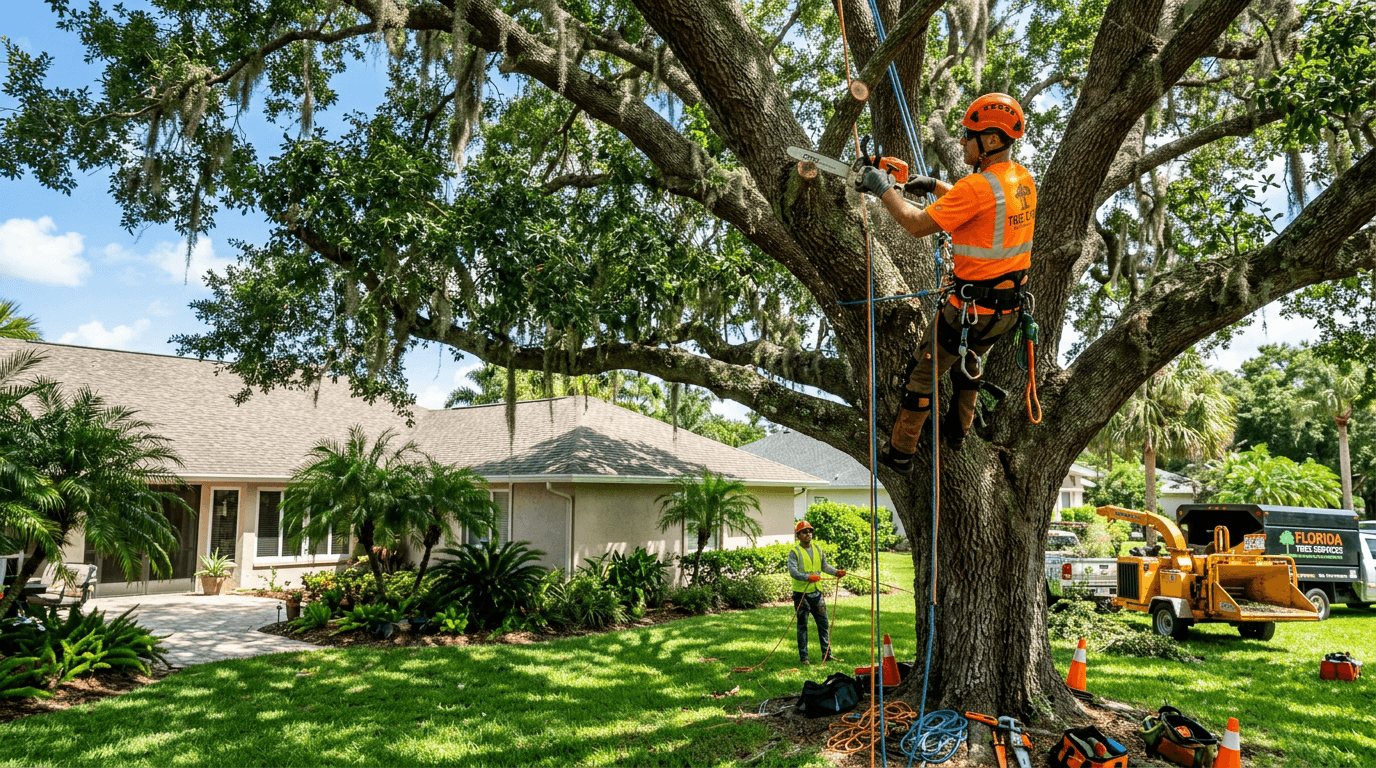
Pruning is one of the most impactful things you can do for the trees on your property — and one of the easiest things to get wrong. At Cox Arboriculture Services, we prune hundreds of trees every month across Orlando, Winter Park, and the surrounding Central Florida area. This guide covers everything we tell our customers: when to prune, how to make proper cuts, which species need special attention, and the mistakes that cost homeowners the most money to fix.
Why Pruning Matters More in Florida
Florida's growing season is longer than most of the country. Trees here don't get a hard dormancy reset the way they do in northern states, which means they grow faster, produce more deadwood, and develop structural problems sooner if left unchecked.
Central Florida also deals with hurricane season from June through November. A well-pruned canopy lets wind pass through instead of catching it like a sail. We've seen the difference firsthand after every major storm — properly maintained trees survive while neglected ones end up on roofs.
Pruning isn't cosmetic. It's structural maintenance that protects your home, your family, and the tree itself.
When to Prune Trees in Florida
Timing depends on the species, but here are the general rules we follow:
Late Winter to Early Spring (January–March)
This is the best window for most structural pruning. Deciduous trees like crepe myrtles, maples, and elms are bare or just starting to bud, giving you clear visibility of the branch structure. Cuts made now heal quickly once the spring growth flush begins.
After Flowering (Spring–Early Summer)
For flowering species — magnolias, redbuds, tabebuias — we prune right after the bloom cycle ends. Pruning before they flower removes the buds and kills that season's display.
Late Summer (August–September)
This is when we do our hurricane prep pruning. We focus on crown thinning and removing deadwood so trees can handle high winds. If you haven't had your trees assessed before hurricane season, check out our storm damage cleanup services for what to do after the fact.
Avoid Heavy Pruning in Fall
Fall pruning stimulates new growth that won't have time to harden before cooler temperatures arrive. Light deadwood removal is fine, but save structural work for winter or spring.
For a deeper dive on timing specific to Orlando, read our guide on when to trim trees in Orlando.
Pruning Techniques That Actually Work
The Three-Cut Method for Large Branches
Never try to remove a heavy branch in a single cut — it will tear bark off the trunk as it falls. Instead:
- Undercut — About 12–18 inches from the trunk, saw upward from the bottom about one-third through the branch.
- Top cut — A few inches farther out from the undercut, saw downward. The branch will snap cleanly at the undercut.
- Final cut — Remove the remaining stub by cutting just outside the branch collar (the swollen ring where the branch meets the trunk).
This method prevents bark stripping and gives the tree a clean wound that compartmentalizes quickly.
Crown Thinning
Crown thinning removes select interior branches to reduce density without changing the tree's overall shape. This improves airflow, reduces wind resistance, and lets more light reach your lawn and landscape below. We typically remove no more than 15–20% of the living canopy in a single session.
Crown Raising
This means removing lower branches to increase clearance beneath the canopy — useful for sidewalks, driveways, and sightlines. In Florida, we commonly raise oaks and magnolias that spread low and wide.
Deadwooding
Removing dead branches is the simplest and safest form of pruning. Deadwood can fall at any time and is a common cause of property damage during storms. We recommend deadwooding at least once a year for mature trees.
Species-Specific Pruning in Central Florida
Live Oaks
Live oaks are the backbone of Florida's tree canopy. They respond well to crown thinning and deadwooding, but avoid heavy crown reduction — it weakens the tree and invites decay. Prune in late winter. Never top a live oak. If you need major limb removal on a live oak, read about our tree pruning services in Orlando.
Crepe Myrtles
The most over-pruned tree in the South. "Crepe murder" — hacking the tree back to stubs every year — creates weak regrowth, ugly knobs, and increased disease pressure. Instead, remove crossing branches, thin the interior, and take out suckers at the base. Prune in late winter before new growth emerges.
Palms
Palms aren't technically trees, but they still need maintenance. Remove only fully brown, dead fronds. Never cut green fronds or "hurricane cut" a palm down to a few leaves — this starves the tree and makes it more vulnerable, not less. See our palm tree trimming guide for the full breakdown.
Southern Magnolias
Magnolias have a naturally dense, pyramidal form. Prune lightly after flowering in late spring. Focus on removing lower branches if you need clearance, and thin the interior to reduce the weight on horizontal limbs. Avoid heavy pruning — magnolias are slow to recover. For more detail, see our magnolia tree care page.
Camphor Trees
Camphors grow fast and get big. They're prone to included bark (where two trunks grow pressed together with bark trapped between them), which is a structural failure point. Early structural pruning to establish a single dominant leader is the best investment. Mature camphors benefit from regular crown thinning to manage their dense canopy.
Pine Trees
Florida pines — slash pines and longleaf pines — generally need less pruning than hardwoods. Remove dead lower branches and any that are rubbing. Don't top pines; they won't recover like hardwoods do. If a pine is declining (thin canopy, excessive needle drop, bark beetle activity), removal is usually the better option. Learn more in our pine tree trimming guide.
Common Pruning Mistakes We See Every Week
Topping
Cutting the main trunk or large branches back to stubs. This is the single worst thing you can do to a tree. It triggers a flush of weak, poorly attached regrowth (water sprouts), opens massive wounds to decay, and destroys the tree's natural structure. Trees that have been topped are more dangerous than unpruned trees, not less.
Flush Cuts
Cutting a branch flush against the trunk removes the branch collar, which is the tissue the tree uses to seal the wound. A flush cut creates a larger wound that takes much longer to close and is more likely to develop internal decay.
Over-Pruning
Removing more than 25% of the living canopy in one session stresses the tree severely. It can trigger a starvation response, sunscald on previously shaded bark, and explosive water sprout growth. If a tree needs major reduction, we spread the work over two to three years.
Lion-Tailing
Stripping all the interior branches and leaving foliage only at the tips — like a lion's tail. This shifts all the weight to the branch ends, making them more likely to break. It also removes the tree's ability to dampen movement in wind.
Pruning at the Wrong Time
Heavy pruning during active growth or right before winter puts unnecessary stress on the tree. Timing matters, especially in Florida where the growing season is so long.
DIY vs. Professional Pruning
Small deadwood removal and light trimming of young trees is reasonable for homeowners with proper tools. But if any of these apply, call a professional:
- The branch is larger than 4 inches in diameter
- The work requires a ladder or climbing
- The tree is near power lines, your house, or a fence
- You're unsure where to make the cut
- The tree has signs of disease or structural defects
Our team handles everything from routine maintenance to complex structural pruning. If you're ready to get your trees in shape, contact us for a free estimate.
Build a Pruning Schedule
The best approach is to establish a recurring maintenance cycle. For most residential properties in Central Florida, we recommend:
- Annually: Deadwood removal and light crown cleaning on all mature trees
- Every 2–3 years: Full structural pruning on oaks, magnolias, and other hardwoods
- Before hurricane season: Targeted wind-resistance pruning (crown thinning, weight reduction on long limbs)
- As needed: Clearance pruning for structures, driveways, and sightlines
A proactive pruning schedule costs far less than emergency removal after a storm. If you'd like help building a plan for your property, our certified arborists are happy to walk your yard and make recommendations. Explore our full range of tree trimming services or give us a call at 321-382-8678.