
Signs a Tree Is Dying
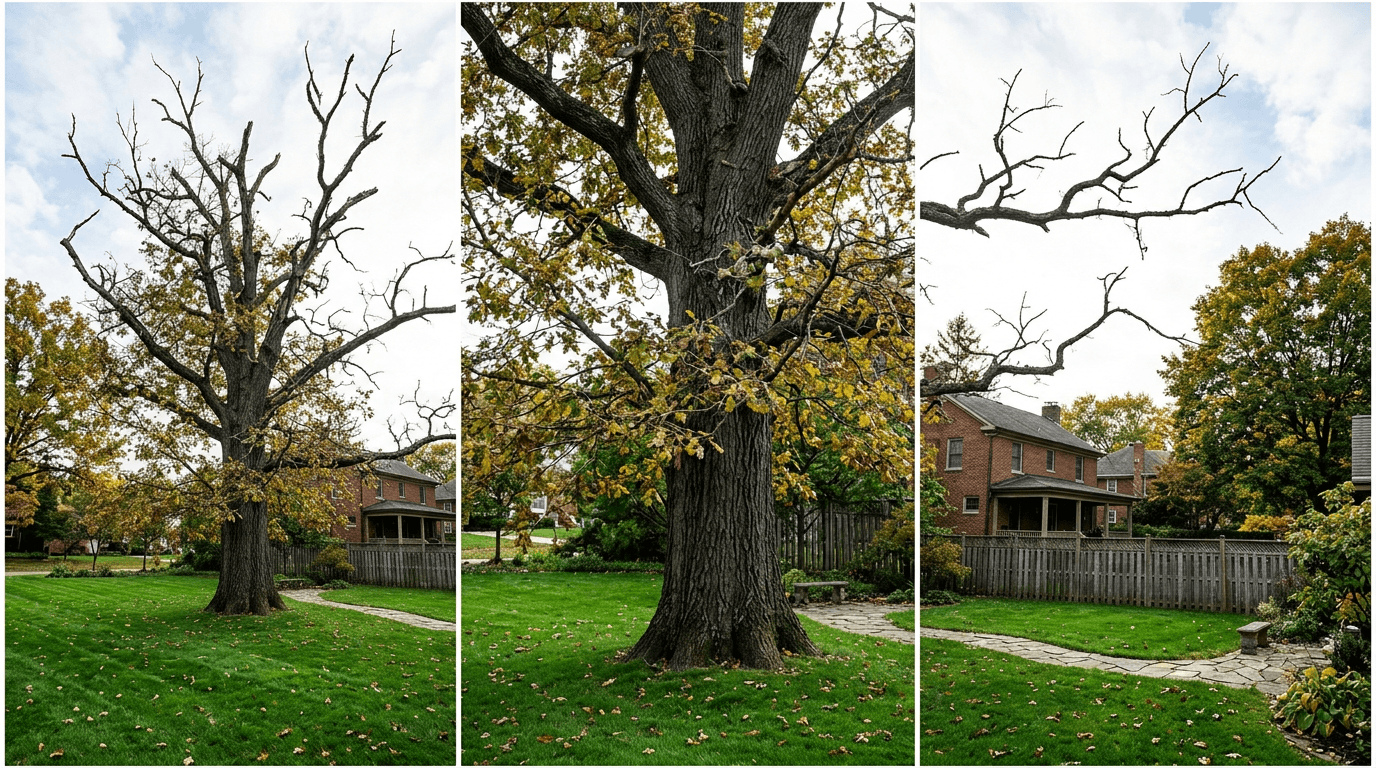
A dying tree doesn't always look dramatic. Sometimes the signs are subtle — a few thin spots in the canopy, bark that feels different, branches that snap too easily. At Cox Arboriculture Services, we evaluate trees across Orlando and Central Florida every day, and the most common thing we hear is "I had no idea it was that far gone." This guide walks you through the warning signs we look for so you can catch problems before a tree fails and causes real damage.
Why You Shouldn't Ignore a Declining Tree
A dead or dying tree is a liability. In Central Florida, where afternoon thunderstorms and hurricanes are part of life, a structurally compromised tree can:
- Drop limbs onto your roof, car, or fence without warning
- Fall entirely during a storm, causing thousands in property damage
- Attract wood-boring insects that spread to healthy trees nearby
- Create legal exposure if it falls onto a neighbor's property
The earlier you identify the problem, the more options you have — sometimes the tree can be treated, sometimes it needs to come down, and sometimes you just need to monitor it. But ignoring it is always the most expensive choice.
10 Warning Signs a Tree Is Dying
1. Dead Branches in the Upper Canopy
A few dead twigs are normal. But large dead branches — especially in the top third of the tree — are a red flag. If those branches didn't leaf out during the growing season, something is wrong with the tree's vascular system or root health. Dead branches are also the most likely to fall during storms.
What to do: Have the tree evaluated. Deadwood should be removed regardless, but the pattern of dieback tells us whether the tree is recoverable. See our tree health assessment services.
2. Bark Falling Off in Large Sections
Healthy bark is a tree's armor. When it starts sloughing off in patches — exposing smooth or darkened wood underneath — it can indicate fungal infection (like Hypoxylon canker), physical damage, or advanced internal decay. Small bark cracks from growth are normal; losing bark in sheets is not.
What to do: Inspect the exposed wood. If it's dark, crumbly, or has a crusty fungal mat, the tree is in serious decline. For more on bark diseases, see our guide to common tree diseases in Central Florida.
3. Mushrooms or Shelf Fungi at the Base
Fungi growing from the base of a tree or from surface roots almost always indicate internal decay in the root system or lower trunk. Ganoderma, Armillaria, and other wood-decay fungi break down the structural wood that holds the tree up.
What to do: This is one of the most urgent signs. A tree with basal fungi can fail without warning. We recommend an immediate professional assessment. Don't wait for the next storm. Contact us for a same-week evaluation.
4. Leaning That Wasn't There Before
All trees have a natural lean. But if a tree that's been upright for years starts leaning — especially if you can see soil heaving or cracking on the side opposite the lean — the root system may be failing.
What to do: A sudden lean is an emergency. Keep people and vehicles away from the fall zone and call a professional. Our team handles emergency tree situations throughout Central Florida.
5. Sparse or Undersized Leaves
A healthy tree produces full-sized leaves in a dense canopy. If your tree's leaves are significantly smaller than normal, fewer in number, or clustered only at branch tips while the interior is bare, the tree is under severe stress. Common causes include root damage, soil compaction, disease, or girdling roots.
What to do: Compare the canopy to previous years. If the decline is progressive (worse each spring), the underlying cause needs diagnosis. Sometimes corrective action — root zone aeration, proper watering, or pest treatment — can reverse the trend.
6. Premature Leaf Drop or Color Change
Leaves turning yellow, brown, or dropping in spring or summer (outside of normal fall patterns) are a distress signal. This can indicate root rot, vascular disease, drought stress, or chemical damage (herbicide drift is more common than people think in Central Florida).
What to do: Note whether the symptoms affect the whole tree or just one side/section. One-sided decline often points to root damage on that side or a vascular disease like bacterial leaf scorch.
7. Cracks or Splits in the Trunk
Vertical cracks running down the trunk can indicate internal decay, frost damage (rare in Orlando, but it happens during hard freezes), or structural failure in progress. Deep cracks that you can see into are especially concerning.
What to do: A crack alone doesn't mean the tree is dying, but it does mean it's structurally compromised. Combined with other symptoms on this list, it's a strong indicator of decline. A certified arborist can assess whether the tree is safe to keep or needs removal.
8. Excessive Sprouting at the Base or Along the Trunk
When a tree sends out clusters of small shoots (epicormic sprouts or suckers) from the base or from large branches, it's often a stress response. The tree is trying to produce new growth because the existing canopy is failing. You'll see this commonly on oaks and maples after severe root damage or heavy pruning.
What to do: A few suckers are normal on some species. But a sudden explosion of sprouts — especially combined with canopy thinning — means the tree is struggling. Don't just trim the suckers; address the root cause.
9. Soft, Spongy, or Hollow Trunk
Press your hand against the trunk. Healthy wood is hard and solid. If the trunk feels soft, gives under pressure, or sounds hollow when tapped, internal decay has consumed a significant portion of the structural wood.
What to do: A hollow trunk doesn't automatically mean the tree has to come down — some trees can survive with significant internal decay if the remaining shell is thick enough. But it requires a professional evaluation to determine safety margins. Our tree root management page covers related below-ground issues.
10. No New Growth in Spring
This is the simplest test. When every other tree on your street is leafing out in March and April and yours isn't, it's likely dead or severely compromised. Scratch a small section of bark on a young branch — if the tissue underneath is green, there's still life. If it's brown and dry, that branch is dead.
What to do: Check multiple branches in different parts of the canopy. If they're all brown inside, the tree is dead and should be removed before it becomes a hazard.
Dead vs. Dormant: How to Tell the Difference
In Central Florida, most trees don't go fully dormant the way they do up north. Deciduous trees like crepe myrtles, elms, and bald cypress drop their leaves in winter but still have viable buds. A tree that looks bare in January is normal. A tree that looks bare in May is in trouble.
The scratch test is your best friend: use a knife or your thumbnail to scratch a pencil-eraser-sized area of bark on a small branch. Green tissue = alive. Brown, dry tissue = dead.
If you're unsure, wait until mid-April. By then, everything that's going to leaf out has leafed out. If your tree still looks bare, it's time to call.
What to Do If Your Tree Is Dying
Step 1: Get a professional diagnosis. Some of these signs overlap with treatable conditions. Don't remove a tree that could be saved, and don't waste money treating a tree that's too far gone. Our certified arborists provide honest assessments — we'll tell you straight whether treatment, monitoring, or removal is the right call.
Step 2: Address safety first. If the tree is near your house, driveway, or anywhere people spend time, secure the area. Dead branches should be removed immediately regardless of the tree's overall prognosis.
Step 3: Plan for replacement. Removing a large tree changes your property's shade, privacy, and aesthetics. We can advise on replacement species that are well-suited to your site and Central Florida's climate. Florida native species like live oaks, sabal palms, and southern magnolias are always strong choices.
When to Call Cox Arboriculture
If you've noticed any of the signs in this guide, don't wait for the next hurricane to make the decision for you. Give us a call at 321-382-8678 or request a free estimate online. We'll come out, evaluate your tree honestly, and give you a clear recommendation — no pressure, no upsell. Your safety and your property are what matter.
For more on specific diseases we see in Central Florida, read our companion guide: Common Tree Diseases in Central Florida.