Who's responsible when a tree falls — and how to protect yourself before it happens
Tree-related property damage is one of the most common — and most confusing — liability situations Florida homeowners face. This guide breaks down responsibility, insurance, and prevention.
Florida's tree liability rules aren't as simple as “your tree, your problem.” The answer depends on whether the tree was healthy, whether you knew about the risk, and what caused it to fall.
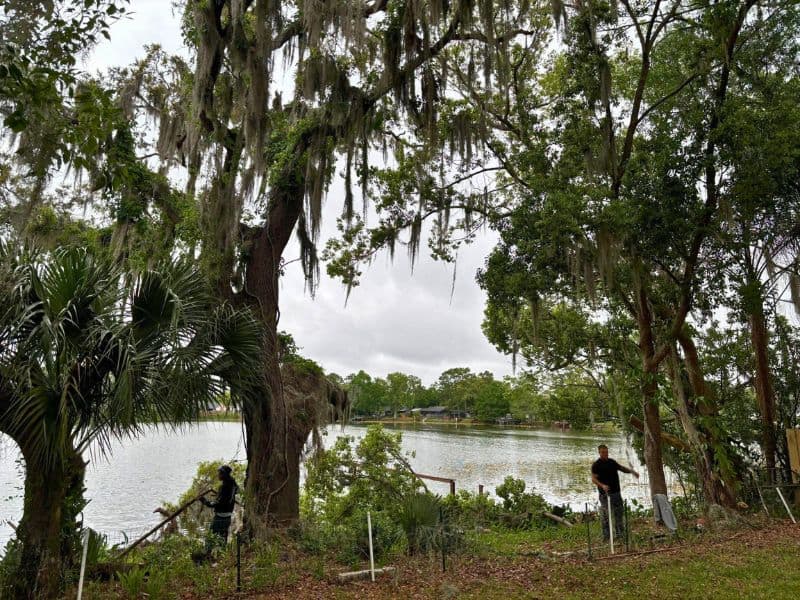
At Cox Arboriculture Services, we deal with the aftermath of fallen trees every week — on homes, fences, cars, and across property lines. The most common question after “can you remove it?” is “who's going to pay for this?” This guide covers Florida-specific liability rules, insurance realities, and the steps you can take now to avoid being on the wrong side of a tree damage claim.
Disclaimer: This guide provides general information about tree liability in Florida based on our experience as arborists. It is not legal advice. For specific legal questions about your situation, consult a Florida attorney.
Florida follows what's commonly called the “reasonable care” standard. Here's how it works in plain language:
The critical concept is knowledge. If you knew or should have known a tree was dangerous and didn't take action, you're exposed. If the tree was healthy and failed in a storm, you're generally not at fault.
If the tree was healthy and fell during a storm, your neighbor's homeowner's insurance typically covers their fence repair. You're generally responsible for removing the portion of the tree that fell onto their property — or at minimum cooperating to get it removed. However, if the tree was dead and you ignored it, your neighbor has grounds to pursue you for the damage.
Your homeowner's insurance covers the structural damage to your house. If the tree was healthy, you generally can't make your neighbor pay. If the tree was obviously dead or you had previously warned them in writing, you may have a negligence claim — but you'd need to prove they knew about the hazard and failed to act.
Comprehensive auto insurance (not collision) covers tree damage to vehicles. If the tree was on public property, you may have a claim against the city or county, but only if they had notice the tree was hazardous. If it was on private property, the same healthy vs. hazardous distinction applies.
Personal injury claims carry far higher stakes than property damage. If a tree or large limb falls and injures a guest, neighbor, or passerby, the property owner's liability depends on whether they exercised reasonable care. Having documentation of regular tree maintenance and professional assessments is your best defense. This is one of the strongest reasons to maintain your trees proactively.
Florida homeowner's insurance coverage for tree damage is more limited than most people expect:
Pro tip: Review your policy's tree removal and debris removal limits before hurricane season. Many homeowners discover their coverage gaps after the storm, when it's too late to adjust.
The best liability protection is proactive tree care. Here's what we recommend to every Orlando-area homeowner:
In Florida, you have the right to trim branches that extend over your property line — but only up to the property line itself, and only if the trimming doesn't kill or seriously damage the tree. If aggressive trimming on your side causes the tree to die, you could be liable for the value of the tree.
Key rules for boundary trees in Florida:
Disputes over boundary trees are one of the most common neighbor conflicts in Orlando's established neighborhoods. A professional arborist assessment often resolves these situations before they escalate — both parties can see the professional opinion on whether the tree is actually hazardous.
Beyond liability between neighbors, you also need to consider local tree protection ordinances. Removing certain trees without a permit can result in fines:
Dead trees and emergency situations are typically exempt from permit requirements, but you may still need to notify the city. We handle the permitting process for our clients — it's part of the service when you hire us for removal.
The cheapest liability protection is maintenance. An annual tree assessment, timely removal of dead trees, and a regular pruning schedule cost a fraction of what a liability claim, foundation repair, or roof replacement costs. If you haven't had your trees professionally assessed in the last year, now is the time — especially with hurricane season approaching.
A professional tree assessment documents that you're a responsible property owner. It's the best liability protection money can buy — and it starts with a free estimate.