How roots compromise structures — and what Central Florida homeowners can do about it
Tree roots follow water and the path of least resistance. When that path leads under your foundation, driveway, or plumbing, the damage can be slow, silent, and expensive.
Central Florida's sandy soils and shallow water tables create conditions where tree roots spread wide and fast — often directly into conflict with your home's infrastructure.
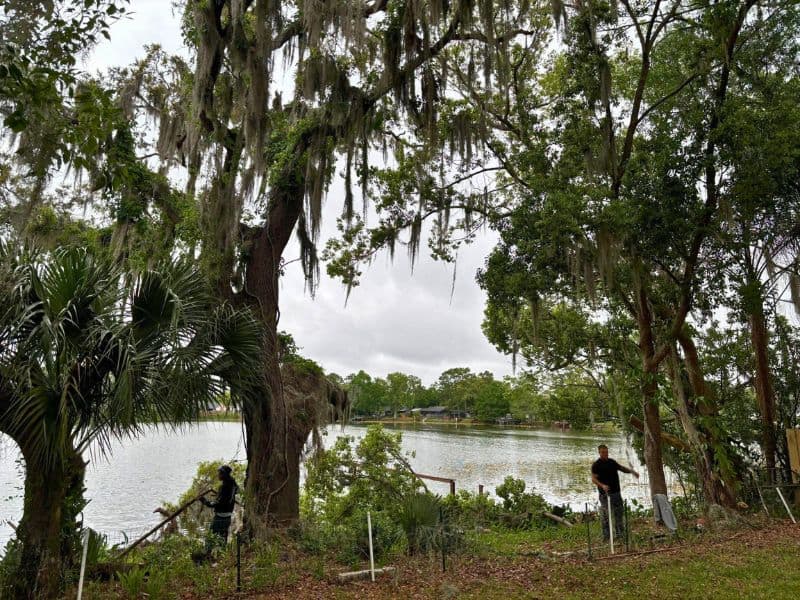
At Cox Arboriculture Services, we get calls every week from Orlando-area homeowners who've discovered cracks in their foundation, heaving in their driveway, or slow drains caused by tree roots. The frustrating part is that the damage usually started years ago — roots work slowly, and by the time the signs are visible above ground, the subsurface damage can be significant.
This guide explains how root damage happens, which trees cause the most problems in Central Florida, what the warning signs look like, and your options for fixing and preventing it.
Roots don't punch through concrete the way most people imagine. The damage mechanism is more subtle and depends on your foundation type and soil conditions.
Large trees can extract hundreds of gallons of water per day from the soil. During Central Florida's dry season (October–May), this creates differential soil moisture — the ground near the tree shrinks as it dries while the ground farther away retains moisture. For slab-on-grade foundations (the standard in Florida), this uneven soil movement causes the slab to settle unevenly, cracking the concrete and the walls above it.
As roots grow in diameter over decades, they can exert significant lateral pressure on foundation walls, retaining walls, pool walls, and underground pipes. This is more common with aggressive-rooted species and older properties where trees have had 30+ years to develop root mass.
Roots are attracted to the moisture and nutrients in sewer lines and irrigation pipes. They enter through small joints or cracks and expand inside the pipe, eventually blocking it completely. Older clay and Orangeburg pipes are especially vulnerable. Modern PVC is more resistant but not immune.
Root damage develops gradually. Watch for these indicators inside and outside your home:
Not all trees are equally destructive. The biggest offenders in our area share common traits: fast growth, aggressive lateral root systems, and high water demand.
The right approach depends on the severity of the damage, the tree's value, and the cost of repair.
Selectively cutting roots on one side of the tree to stop them from advancing toward the structure. This works for minor conflicts but carries risk — removing too many roots on one side can destabilize the tree, making it prone to windthrow. A certified arborist should assess how much root mass can be safely removed.
Heavy-duty polyethylene or fabric barriers installed in a trench between the tree and the structure. Roots hit the barrier and deflect downward instead of continuing toward the foundation. Effective for prevention but less useful once damage has already occurred. Barriers should extend at least 24 inches deep and must be installed correctly to avoid creating root-girdling issues.
When root damage is severe or ongoing, removing the tree and grinding the stump is the permanent solution. After removal, dead roots will decompose over several years. In some cases, major roots may need to be excavated and removed to allow foundation or pipe repair.
Learn more about our tree root management services, professional tree removal, and stump grinding services.
The best way to prevent root damage is to plan before you plant. These guidelines apply across Central Florida:
If you're building an addition or installing hardscaping near existing trees, consult with an arborist first. Our tree health assessment includes root zone evaluation that can identify potential conflicts before construction begins.
In most cases, homeowner's insurance in Florida does not cover gradual foundation damage from tree roots — it's classified as a maintenance issue rather than a sudden event. However, if a tree falls and damages your foundation during a named storm, that's typically covered under wind/storm damage provisions.
This is another reason prevention matters. The cost of proactive root management or tree removal is a fraction of a foundation repair bill. For more on liability issues, see our falling trees and liability guide.
Our certified arborists assess root conflicts and give you straight answers — root prune, install a barrier, or remove the tree. We'll tell you what makes sense for your situation.