
Hurricane Tree Damage Prevention Guide
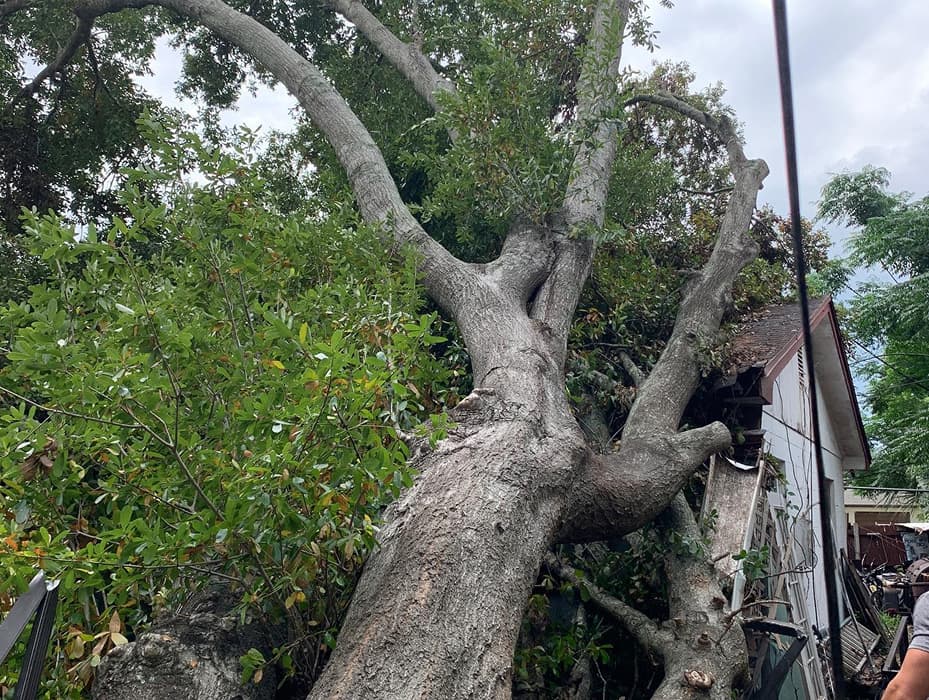
In Central Florida, hurricane season is not a question of if but when. Every year, Orlando-area homeowners watch tropical systems churn across the Atlantic and Gulf, and every year trees come down on roofs, cars, fences, and power lines across our community. At Cox Arboriculture Services, we have responded to the aftermath of more storms than we can count—and the pattern is always the same. The properties that escape serious damage are the ones where someone took preventive action long before the first raindrop fell. This guide brings together everything we have learned about preventing hurricane tree damage: what causes it, how to reduce your risk, and what to do before, during, and after a storm.
If you want a focused, step-by-step preparation routine, pair this with our companion guide on how to protect trees before hurricane season. Here, we take the wider view of damage prevention as a whole.
Why Trees Fail in Hurricanes
Understanding why trees fail is the key to preventing it. In our experience, hurricane tree damage almost always traces back to one or more of these causes:
- Excessive canopy density. An unpruned, leafed-out canopy acts like a sail, catching enormous wind force and transferring it to the trunk and roots.
- Structural defects. Co-dominant stems, included bark, weak branch unions, and over-extended limbs concentrate stress and split under load.
- Decay and disease. Internal rot, fungal infections, and cavities hollow out a tree from the inside, leaving a shell that snaps in high wind.
- Compromised roots. Severed, girdling, or rotted roots, plus saturated sandy soil, dramatically reduce a tree's ability to stay anchored.
- Poor species or placement. Brittle, fast-growing species and trees planted too close to structures fail more often and cause more damage when they do.
None of these problems appear overnight, and almost all of them are manageable—if you address them before the storm.
The Core Strategies for Preventing Hurricane Tree Damage
1. Reduce Wind Load Through Proper Pruning
The most effective prevention measure is professional pruning that lets wind pass through the canopy rather than push against it. Crown thinning, crown reduction, and deadwood removal—performed to ISA standards—reduce the sail effect and eliminate the limbs most likely to break free and become dangerous debris.
A critical warning: over-pruning is not prevention, it is sabotage. "Hurricane cuts," lion-tailing, and topping all weaken trees, concentrate weight at the branch tips, and trigger weak regrowth that fails in future storms. The goal is a balanced, structurally sound canopy, not a stripped one. Our tree pruning in Orlando and tree trimming services are built around proven arboricultural standards, never shortcuts.
2. Correct Structural Weaknesses Early
Young and mid-aged trees can be trained through structural pruning to develop strong central leaders and well-spaced limbs—setting them up to withstand decades of storms. For mature trees with valuable but vulnerable structure, professional cabling and bracing can provide supplemental support that prevents splitting at weak unions. These interventions work best when planned years ahead, which is why ongoing tree care is the cheapest insurance you can buy.
3. Maintain Root and Soil Health
Because saturated Central Florida soil is a leading cause of uprooting, root health is non-negotiable. Protect the root zone from compaction, paving, and trenching; mulch properly (2–3 inches, kept off the trunk); and water deeply and infrequently to encourage a strong, downward-reaching anchor. Watch for fungal conks and root rot, which signal a weakened foundation. Our tree root management in Orlando helps keep the part of the tree you can't see as strong as the part you can.
4. Identify and Remove High-Risk Trees
Some trees cannot be made safe, and pretending otherwise is how homes get destroyed. A severely decayed, heavily leaning, or structurally failing tree positioned over your house or driveway is a liability heading into every storm. Proactive removal on a calm day is dramatically safer and cheaper than emergency removal after a failure. When our tree health assessment flags a tree as unacceptably risky, professional tree removal before the season is the responsible choice.
5. Choose Wind-Resistant Trees and Smart Placement
Prevention extends to what and where you plant. In Central Florida, live oaks, bald cypress, sabal palms, and southern magnolias tend to weather storms far better than laurel oak, water oak, and brittle fast-growing softwoods. Keep new trees a sensible distance from your home, driveway, and power lines, and give them room to develop strong root systems. Smart choices today prevent damage for decades.
Before the Storm: Your Final 72 Hours
Once a storm enters the forecast, the window for tree work has closed—but you still have important prevention steps:
- Do not attempt last-minute pruning. It is unsafe, and debris left in the yard becomes a projectile.
- Pick up and secure loose yard items, potted plants, and any cut branches.
- Document your trees and property with photos and video. This protects you if you need to file an insurance claim later.
- Clear gutters and storm drains of leaves so water can drain away from root zones.
- Identify safe areas inside your home away from large trees that could fall toward the house.
During the Storm: Stay Clear
The prevention work is done; now your only job is safety. Stay indoors and away from windows facing large trees. Never go outside to check on a tree during the storm—falling limbs and flying debris cause many of the worst hurricane injuries. If a tree fails and strikes your home, move to an interior room and call for help once it is safe.
After the Storm: Assess, Document, and Recover Safely
When the winds die down, careful action prevents the "second wave" of injuries and damage that often follows a storm:
- Watch for downed power lines. Treat every line as live. If a tree is on a line, stay 35 feet away and call 911 and your utility—see our guide on what to do when a tree is touching power lines.
- Do not approach leaning trees or hanging limbs. Trees under tension can shift or release suddenly.
- Document all damage thoroughly for insurance before anything is moved or cut.
- Call professionals for hazardous work. Removing trees from roofs, cutting limbs under tension, and felling partially uprooted trees require trained crews and specialized equipment.
Our emergency tree service checklist walks through the full post-storm sequence, and our team provides rapid storm damage cleanup in Orlando, storm debris cleanup, and complete stump grinding to get your property safe and clear.
The Real Cost of Skipping Prevention
We understand that tree care can feel like an expense that's easy to defer. But consider the math: a season of professional pruning and an assessment costs a small fraction of repairing a roof crushed by a falling oak, replacing a vehicle, or paying for emergency after-hours removal in the chaos following a hurricane. Beyond the dollars, a single preventable tree failure can endanger your family. Prevention is not just cheaper—it is the difference between watching a storm pass and living through its aftermath for months.
Partner with Cox Arboriculture for Storm Resilience
For years, Central Florida homeowners and businesses in Orlando, Winter Park, Maitland, Sanford, Longwood, and beyond have trusted us to keep their trees safe through hurricane season. We are licensed and insured, we work to ISA and OSHA standards, and we bring decades of combined experience to every assessment, pruning job, and removal.
The best time to prevent hurricane tree damage is before the season begins. Call us today at 321-382-8678 or reach out through our contact page for a free estimate. Let's make sure your trees are an asset that survives the storm—not a hazard that defines it.