
Tree Touching Power Lines: What to Do
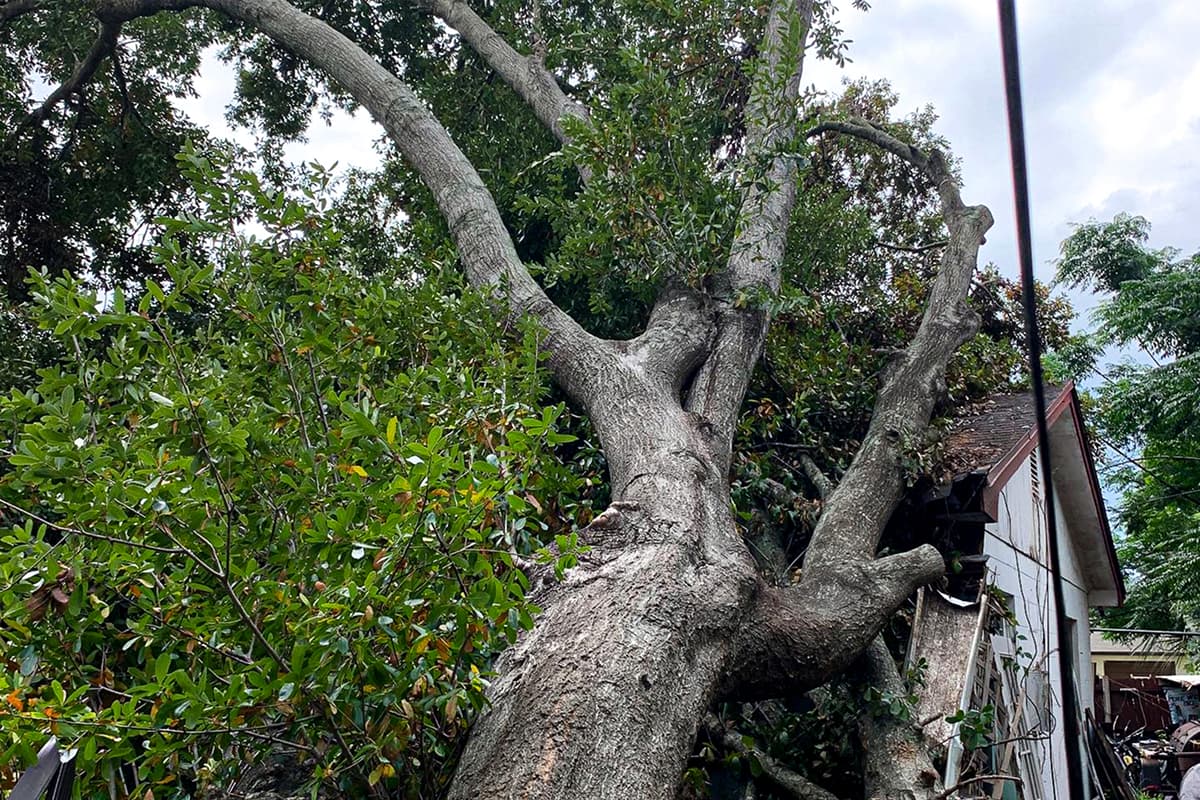
A tree limb resting against a power line is one of the most dangerous situations we encounter in Central Florida, and it is also one of the most common after a storm rolls through Orlando. Homeowners often assume a branch brushing a line is harmless, or that they can trim it themselves with a pole saw. Both assumptions can be fatal. At Cox Arboriculture Services, we want every homeowner in our community to understand exactly what to do—and what never to do—when a tree is touching power lines.
This guide explains the real risks, the immediate safety steps, who is responsible for what, and why this is one job you should always leave to trained professionals and the utility company.
First, Treat Every Line as Live and Deadly
The single most important rule: assume every wire is energized and lethal, even if it looks like a harmless cable. You cannot tell by looking whether a line carries 120 volts or 13,000. Electricity can travel through a tree branch, through the wet bark, and into anything—or anyone—touching it. People have been seriously injured or killed simply by standing near a tree that was in contact with a line.
Keep yourself, your family, and your pets at least 35 feet away from any tree or branch touching a line. Do not touch the tree, do not touch anything leaning against it, and never use a ladder, pole saw, or pruning pole anywhere near it. Even a wooden or fiberglass tool can conduct electricity when wet.
Downed Lines vs. Branches Resting on Lines
There are two distinct scenarios, and both are dangerous.
A Branch or Tree Touching an Intact Line
If a tree is leaning into or rubbing against an overhead line that is still strung up, the line may still be energized and the contact can cause arcing, fires, and outages. Do not attempt to push the branch off or trim it. This is utility territory.
A Downed Power Line
If the line has been pulled down—often because a falling tree dragged it to the ground—treat the entire area as an active hazard zone. A downed line can energize the ground around it, fences, puddles, and metal objects. If a line falls on your car while you are inside, stay in the vehicle and call 911 unless there is a fire forcing you out. If you must exit, jump clear with both feet together and hop away without touching the car and ground at the same time.
Who to Call—and in What Order
When a tree is touching or has downed a power line, the order of your calls matters.
- Call 911 if there is a fire, an injury, or an immediately dangerous downed line.
- Call your electric utility. In Central Florida that is typically Duke Energy or OUC (Orlando Utilities Commission), depending on your service area. The utility owns the lines and is responsible for de-energizing them and clearing vegetation from their high-voltage transmission and service lines.
- Call a professional tree service like Cox Arboriculture once the utility has confirmed the lines are safe, or to handle the tree work the utility will not do (such as the portion of the tree on your property, or full removal of a compromised tree).
A common point of confusion: the utility will usually trim or clear branches directly threatening their primary lines, but they generally do not handle the service line running from the pole to your house, nor do they remove the whole tree or clean up your yard. That is where we come in—after the lines are safe.
Why You Should Never DIY This
We understand the instinct to grab a saw and deal with it yourself, especially when the branch looks small. Please don't. Here is what makes this job uniquely dangerous:
- Electrocution risk. Electricity can jump (arc) to a nearby object without direct contact, and it travels through green wood, sap, and water with ease.
- Stored tension. A limb pressing on a line is often under load. Cutting it can cause it to spring violently or pull the line down.
- No safe clearance. Proper line-clearance work requires specialized training, insulated equipment, and often de-energized lines—none of which a homeowner has.
- Legal and liability exposure. Damaging a utility line or causing an outage can leave you responsible for significant repair costs.
Line-clearance tree trimming is a specialized discipline. Even our crews coordinate with the utility before working anywhere near energized conductors.
Preventing Power Line Tree Problems Before They Start
The best way to handle a tree touching a power line is to make sure it never gets there. Central Florida's fast-growing species—laurel oaks, water oaks, and others—can put on several feet of growth in a single season, quickly reaching toward overhead lines. Hurricane season compounds the risk, turning an overgrown tree into a serious hazard.
Proactive care makes all the difference:
- Plant the right tree in the right place. Avoid planting tall-growing species directly under or beside power lines. Lower-growing ornamentals are a far safer choice near utilities.
- Schedule regular structural pruning. Routine tree trimming services keep canopies a safe distance from lines and remove the weak, dead limbs most likely to fail.
- Get a pre-storm assessment. Our tree health assessment in Orlando identifies trees that are leaning, decayed, or growing dangerously close to utilities before a storm forces the issue.
If a tree on your property is already crowding a line, we can plan and execute the work safely in coordination with your utility through our professional tree removal services.
What to Do After the Immediate Danger Passes
Once the utility has secured the lines and the immediate hazard is gone, you may still have a damaged or compromised tree on your hands—and a yard full of debris. This is the point where we step in. Our team handles everything from removing the damaged tree to full storm damage cleanup in Orlando and stump grinding, leaving your property safe and clear. If the event was part of a larger storm, our emergency tree service checklist walks through the full set of steps for documenting damage and working with insurance.
We are licensed, insured, and experienced in the careful work required near utilities throughout Orlando, Winter Park, Maitland, Sanford, and the surrounding Central Florida communities.
The Bottom Line
A tree touching a power line is never a DIY project. Keep your distance, assume the line is live, call 911 and your utility first, and only bring in a tree service once the lines are confirmed safe. Taking these steps protects your life, your family, and your property.
If you have a tree crowding the lines on your property—or storm damage that needs professional, utility-coordinated removal—reach out to our team at 321-382-8678 or through our contact page for a free estimate. We will help you handle it the right way.