Effective Land Clearing Methods
Not all land clearing is done the same way, and choosing the right method makes an enormous difference in cost, timeline, and the condition of your property afterward. At Cox Arboriculture Services, we clear land across Orlando and Central Florida using a range of techniques—and the "best" method always depends on the specific site, your goals, and the terrain. This guide walks through the most effective land clearing methods, their pros and cons, and when each one makes the most sense.
If you want to understand the full clearing process from start to finish, pair this with our companion guide on what land clearing entails for your property. Here, we focus specifically on the methods themselves.
How to Choose the Right Method
Before comparing techniques, it helps to know what drives the decision. When we assess a project, we weigh several factors:
- Your end goal—building, pasture, driveway, drainage, or simply cleanup.
- Vegetation density and type—light brush versus mature hardwoods.
- Terrain and soil conditions—flat and dry versus sloped or wet.
- Environmental sensitivity—proximity to wetlands, protected trees, or waterways.
- Budget and timeline.
- Soil preservation needs—whether you want to protect topsoil and minimize erosion.
The right method balances all of these. Often, the most effective approach is a combination of techniques rather than a single one.
1. Forestry Mulching
Forestry mulching has become one of the most popular modern land clearing methods, and for good reason. A single machine equipped with a mulching head cuts, grinds, and clears vegetation in one pass, leaving the ground material behind as a layer of mulch.
Advantages:
- Efficient—one machine, one operator, one step.
- Eco-friendly—the mulch stays on site, returning nutrients to the soil, reducing erosion, and suppressing regrowth.
- Minimal ground disturbance—it protects topsoil and doesn't leave big holes or ruts.
- No hauling costs—material is repurposed on site rather than trucked away.
Best for: Clearing underbrush, small-to-medium trees, and creating trails, fence lines, or selectively cleared areas where you want to preserve soil structure.
Limitations: It's less suited to very large trees or projects where the ground must be completely bare, and the mulch layer may need to be managed for certain construction uses.
2. Grubbing and Dozer Clearing
Grubbing involves removing vegetation and its root systems, typically using a bulldozer, excavator, or similar heavy equipment to push over trees and rip out roots and stumps. This is the traditional "clear everything" approach.
Advantages:
- Thorough—removes trees, stumps, and roots completely.
- Fast on large open areas with heavy equipment.
- Produces a clean, bare site ready for construction.
Best for: Large-scale clearing, construction sites requiring completely clear ground, and removing extensive root systems.
Limitations: It's more disruptive to the soil, can cause significant erosion if not managed, disturbs topsoil, and generates debris that must be hauled away or processed. It typically requires more site restoration afterward.
3. Selective (Manual) Clearing
Selective clearing is a targeted approach where specific trees and vegetation are removed by hand or with smaller equipment while preserving desirable trees and features. It combines chainsaw work, brush cutting, and careful removal.
Advantages:
- Precise—protects valuable specimen trees and existing landscaping.
- Environmentally sensitive—ideal near wetlands, protected trees, or established features.
- Preserves property value by keeping mature, healthy trees.
Best for: Residential lots, properties where you want to keep certain trees, environmentally sensitive areas, and refined results.
Limitations: It's more labor-intensive and slower than mechanized methods, and therefore can cost more per acre on dense sites.
4. Combination and Equipment-Based Clearing
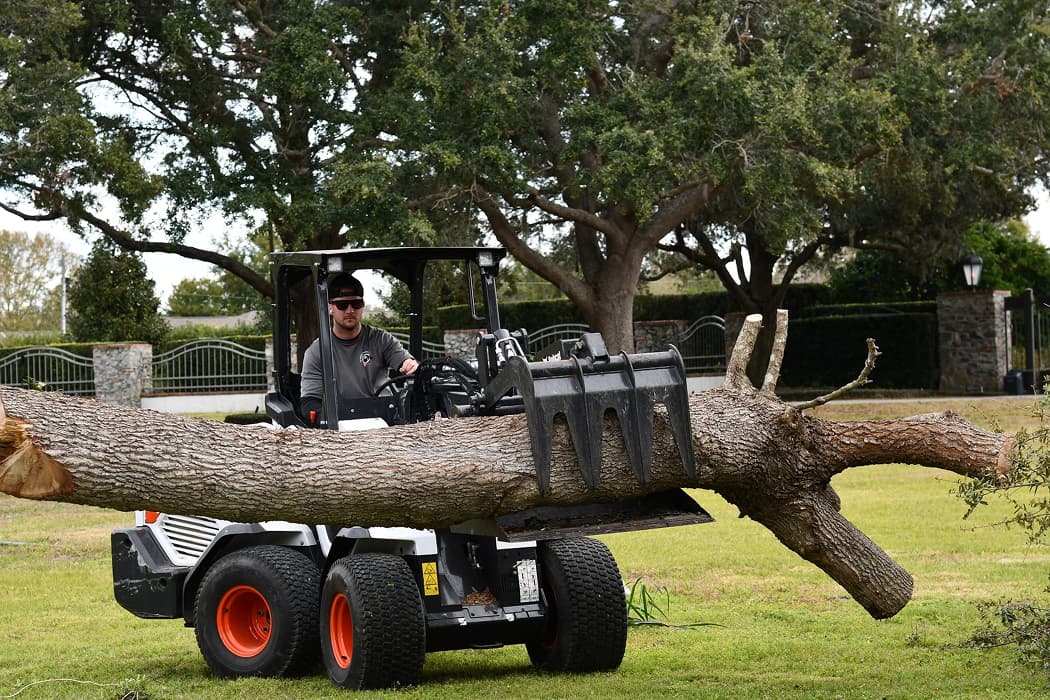
In practice, the most effective clearing projects often blend methods. We might use selective clearing to protect valuable oaks, forestry mulching for the underbrush, and compact equipment for stump removal and grading. Versatile machines like skid steers and compact track loaders are workhorses for Central Florida lots—they handle brush removal, hauling, grading, and site prep efficiently.
Our bobcat services provide exactly this kind of flexible, equipment-based clearing and site work, letting us adapt to whatever your property requires.
Methods to Avoid or Use with Caution
Some clearing methods that were once common are now discouraged or heavily regulated:
- Controlled burning can be effective but is strictly regulated in Florida, weather-dependent, and carries real risk. It requires proper permits and should never be attempted casually.
- Chemical clearing (herbicides) has environmental drawbacks and limited use cases, particularly near water.
We prioritize methods that are safe, compliant, and responsible for our Central Florida environment.
Don't Forget Stumps and Debris
Whatever method you choose, two things always need addressing: stumps and debris. Leftover stumps sprout regrowth, harbor pests, and obstruct construction, so they should be ground down or excavated—our stump grinding services handle this cleanly. Debris from clearing must be hauled, chipped, or otherwise managed responsibly, which our storm debris cleanup and hauling capabilities cover.
The Florida Factor
Central Florida's sandy soils, high water table in many areas, frequent rain, and environmental regulations all influence method selection. Erosion control matters here—which is one reason forestry mulching's soil-protecting qualities are so valuable on many local projects. Wetland proximity often demands selective, low-impact methods. And our regulations mean compliance is always part of the equation. An experienced local team knows how to match the method to these realities.
Get the Right Method for Your Property
The most effective land clearing method is the one matched to your specific site, goals, and budget—and that's a determination best made by professionals who know Central Florida land. Whether your project calls for the efficiency of forestry mulching, the thoroughness of grubbing, the precision of selective clearing, or a smart combination, our licensed and insured team delivers results that set your property up for success.
We provide complete land clearing services for residential and commercial properties throughout Orlando, Winter Park, Sanford, and the greater Central Florida area. Call us at 321-382-8678 or reach out through our contact page for a free estimate, and we'll recommend the right clearing method for your land.